
Comparison · Type 2 diabetes
Ayurveda vs Allopathy for Diabetes: An Honest Comparison

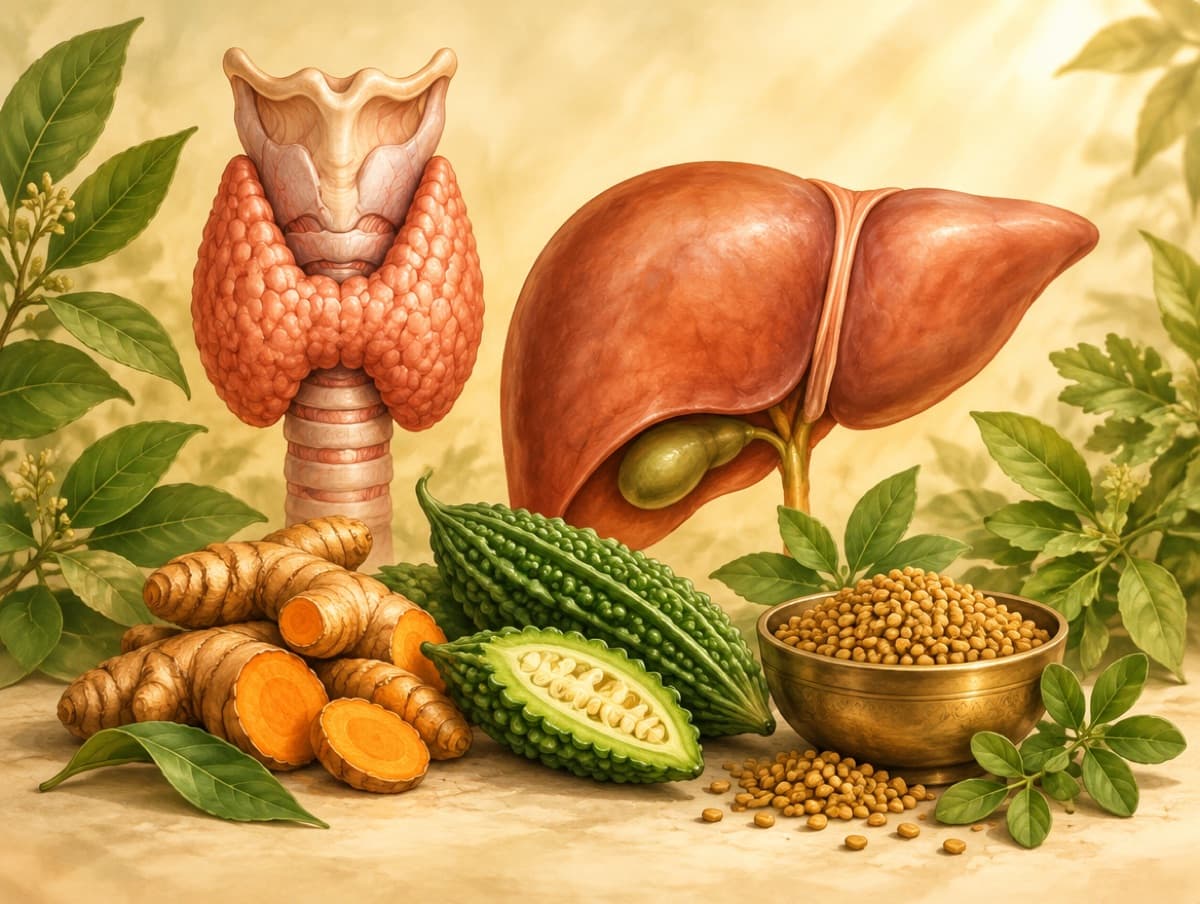
Conventional medicine leads in diabetes: type 1 always needs insulin, and metformin, newer drugs and HbA1c, eye, kidney and foot checks are proven to prevent complications in type 2. Ayurveda treats Madhumeha through diet, routine, exercise and formulations such as Guduchi and Amalaki, working alongside prescribed medication to support glucose control. No prescribed drug is stopped without your physician.
01
The two ways of reading type 2 diabetes
Diabetes is the condition where the case for conventional medicine is strongest, and this page says so plainly. Type 1 diabetes needs insulin without exception. In type 2, metformin, the newer SGLT2 and GLP-1 drugs, and the routine of HbA1c, eye, kidney and foot checks have been shown in large trials to prevent blindness, kidney failure and amputation. No Ayurvedic treatment has that evidence base, and no honest practitioner claims otherwise.
What Ayurveda offers is a structured approach to the diet, digestion, weight and daily routine that conventional care advises but rarely has time to deliver. Madhumeha is described in the Charaka Samhita and the Sushruta Samhita as a disorder of Kapha, Meda (fat tissue) and weak Agni. Dr. Arvinder Singh Bali treats it alongside the patient's physician, with all prescribed medication continuing.
02
Side by side
- How the condition is understood
Classical Ayurveda
Madhumeha, one of the Prameha (urinary disorders) described in the Charaka Samhita, Chikitsa Sthana (Prameha Chikitsa): Kapha and Meda accumulating through sedentary habit and heavy food, weakening Agni. A Vata-dominant form is described as harder to treat.
Conventional medicine
Type 1 is autoimmune loss of insulin production. Type 2 is insulin resistance with progressive loss of insulin secretion, driven by genetics, weight, inactivity and age. Diagnosed by HbA1c or fasting glucose.
- First-line treatment
Classical Ayurveda
Diet to reduce Kapha and correct Agni, daily exercise (Vyayama), and formulations such as Guduchi, Amalaki, Triphala and Chandraprabha Vati chosen by pattern, alongside prescribed drugs.
Conventional medicine
Diet, exercise and weight loss with metformin from diagnosis in most guidelines. SGLT2 inhibitors or GLP-1 agonists added early where heart or kidney disease is present. Insulin for type 1 and for type 2 when other drugs are insufficient.
- Time to relief
Classical Ayurveda
Energy, digestion and weight often change within four to eight weeks. Any effect on glucose readings is judged by the patient's own monitoring and the next HbA1c, three months on.
Conventional medicine
Metformin lowers glucose within one to two weeks. Insulin acts within hours. HbA1c reflects change over three months. Clearly the faster and more predictable option.
- Approach to root cause
Classical Ayurveda
Treats the Kapha, Meda and Agni pattern through food, movement and routine, so that insulin resistance improves and medication does its work more easily.
Conventional medicine
Weight loss, exercise and some newer drugs act on insulin resistance directly, and intensive lifestyle programmes can bring type 2 glucose into remission in some patients. Most drug treatment manages glucose rather than the cause.
- Procedures or surgery
Classical Ayurveda
Panchakarma in Chandigarh for selected patients with heavy Kapha, chiefly Virechana and Basti, with glucose monitored throughout. No surgery.
Conventional medicine
Bariatric surgery for type 2 diabetes with obesity, which has strong evidence for remission. Laser and injections for retinopathy, dialysis and transplant for kidney failure, and surgery for foot complications.
- Side effects and monitoring
Classical Ayurveda
Formulations are generally well tolerated. Because diet and formulations can lower glucose, patients on insulin or sulfonylureas monitor more often at the start to avoid hypoglycemia. Mineral preparations are not shipped abroad.
Conventional medicine
Metformin causes stomach upset and, rarely, B12 deficiency. Sulfonylureas and insulin cause hypoglycemia. SGLT2 inhibitors raise genital infection risk. All require regular blood and urine monitoring, which is a strength.
- Diet and lifestyle role
Classical Ayurveda
Central. Meal timing, food choice by Dosha, portion, and daily exercise are the treatment, reviewed at every visit with the patient's glucose log.
Conventional medicine
First-line in every guideline and supported by strong evidence, though usually delivered as a dietitian referral or leaflet rather than continuous supervision.
- Diagnostics used
Classical Ayurveda
History, Nadi and tongue assessment, Prakriti and Vikriti, and the patient's own glucose log. Dr. Bali requires a recent HbA1c, kidney function and lipid results before treatment.
Conventional medicine
HbA1c, fasting and post-meal glucose, kidney function, urine albumin, lipids, retinal photography and foot examination. Clearly the stronger system, and the only way complications are found early.
- Long-term management
Classical Ayurveda
Diet and routine kept in place, formulations adjusted to the HbA1c trend, review every three months alongside the physician's own checks.
Conventional medicine
HbA1c every three to six months, annual eye, kidney and foot screening, blood pressure and cholesterol treatment. Medication is stepped up as the disease progresses.
- Cost and access
Classical Ayurveda
Consultation and formulations, with fees confirmed at booking. Most of the treatment can be delivered by video with the patient's own glucose monitoring.
Conventional medicine
Metformin and insulin are inexpensive in most countries. Newer drugs are costly. Complication screening depends on the health system.
03
When conventional medicine should lead
- Type 1 diabetes, at any age: insulin is essential and no Ayurvedic treatment replaces it.
- Very high glucose with vomiting, abdominal pain, drowsiness or fruity breath, which may be ketoacidosis and is an emergency.
- New diagnosis, pregnancy with diabetes, or an HbA1c well above target, where medication should start without delay.
- Any complication: changes in vision, foot ulcers or numbness, protein in the urine, or chest pain, which need specialist care.
- You are on insulin, metformin or any glucose-lowering drug: continue it, and add Ayurveda alongside with your physician informed.
04
When Ayurveda is a reasonable step
- Type 2 diabetes controlled on medication, where you want a supervised diet and routine to make control steadier.
- Prediabetes or early type 2 diabetes where your physician has advised lifestyle change first and you want structure for it.
- Weight gain, sluggish digestion, fatigue or constipation alongside diabetes, which point to Kapha and weak Agni.
- Glucose that swings despite medication, once the physician has confirmed the drug plan is right.
- You want treatment that changes daily habits, delivered as a plan rather than advice.
05
How the two work together
Dr. Bali treats diabetes alongside the patient's physician or endocrinologist, never in place of them. Insulin, metformin and every other prescribed drug continue. He requires a recent HbA1c, kidney function and lipid results before the first consultation, and he asks patients on insulin or sulfonylureas to check glucose more often for the first few weeks, because a change in diet and formulations can lower readings and the physician may need to adjust the dose.
Any dose change is made by the prescribing doctor, not by the patient or by Dr. Bali. Eye, kidney and foot screening stay on the physician's schedule, and any complication is referred at once. Patients abroad are reviewed by video every three months, timed to their HbA1c, with plant-based formulations shipped and the glucose log shared at each visit.
06
Frequently asked questions
Is Ayurveda better than allopathy for diabetes?
No. Conventional medicine has the evidence for preventing the complications of diabetes, and insulin and metformin are not optional. Ayurveda adds a structured approach to diet, digestion, weight and routine that supports glucose control alongside prescribed drugs. Used together, patients often see steadier readings.
Can I take Ayurvedic medicine with metformin?
Yes, in most cases. Plant-based formulations such as Guduchi, Amalaki and Triphala are commonly used alongside metformin, and Dr. Bali checks your full medication list first. Keep your HbA1c and kidney checks on schedule. Metformin is never stopped on his advice.
Can Ayurveda replace insulin?
No. In type 1 diabetes insulin is life-sustaining, and in type 2 it is prescribed when other drugs are not enough. Ayurvedic diet and formulations can support control alongside insulin, and any change to the dose is made by your physician based on your readings.
Can Ayurveda lower HbA1c?
Diet, exercise and routine lower HbA1c in many patients, whichever system delivers them, and Ayurveda delivers them as a supervised plan with formulations in support. Dr. Bali does not quote figures; progress is judged by your own HbA1c results, shared with your physician.
Is Ayurvedic medicine safe for diabetics?
Plant-based classical formulations dispensed with a certificate of analysis are generally well tolerated. The main precaution is hypoglycemia in patients on insulin or sulfonylureas, which is why monitoring increases at the start. Mineral preparations (Bhasma) are not shipped abroad. Tell Dr. Bali every medication and supplement you take.
How long does Ayurvedic treatment for diabetes take?
Energy, digestion and weight usually change within four to eight weeks. The effect on glucose is judged at the next HbA1c, three months on, and the plan is adjusted from there. The diet and routine are meant to be kept for life, as they would be under conventional care.

Written and reviewed by
Dr. Arvinder Singh Bali, BAMS
22+ years of clinical practice · 3,00,000+ patients · Government Ayurvedic College, Punjab
Dr. Arvinder Singh Bali is a BAMS qualified classical Ayurvedic physician with over 22 years of clinical practice in Chandigarh, Punjab, India, who has treated 3,00,000+ patients and provides online Ayurvedic consultations through Calmvida to patients in the USA, Canada, UK, Australia, UAE, Russia and Uzbekistan.
Last updated 3 September 2026
Bring your reports. Get a plain answer.
Dr. Bali will tell you whether Ayurveda is the right first step for your case, or whether your specialist should lead.