
Comparison · Arthritis
Ayurveda vs Allopathy for Arthritis: An Honest Comparison

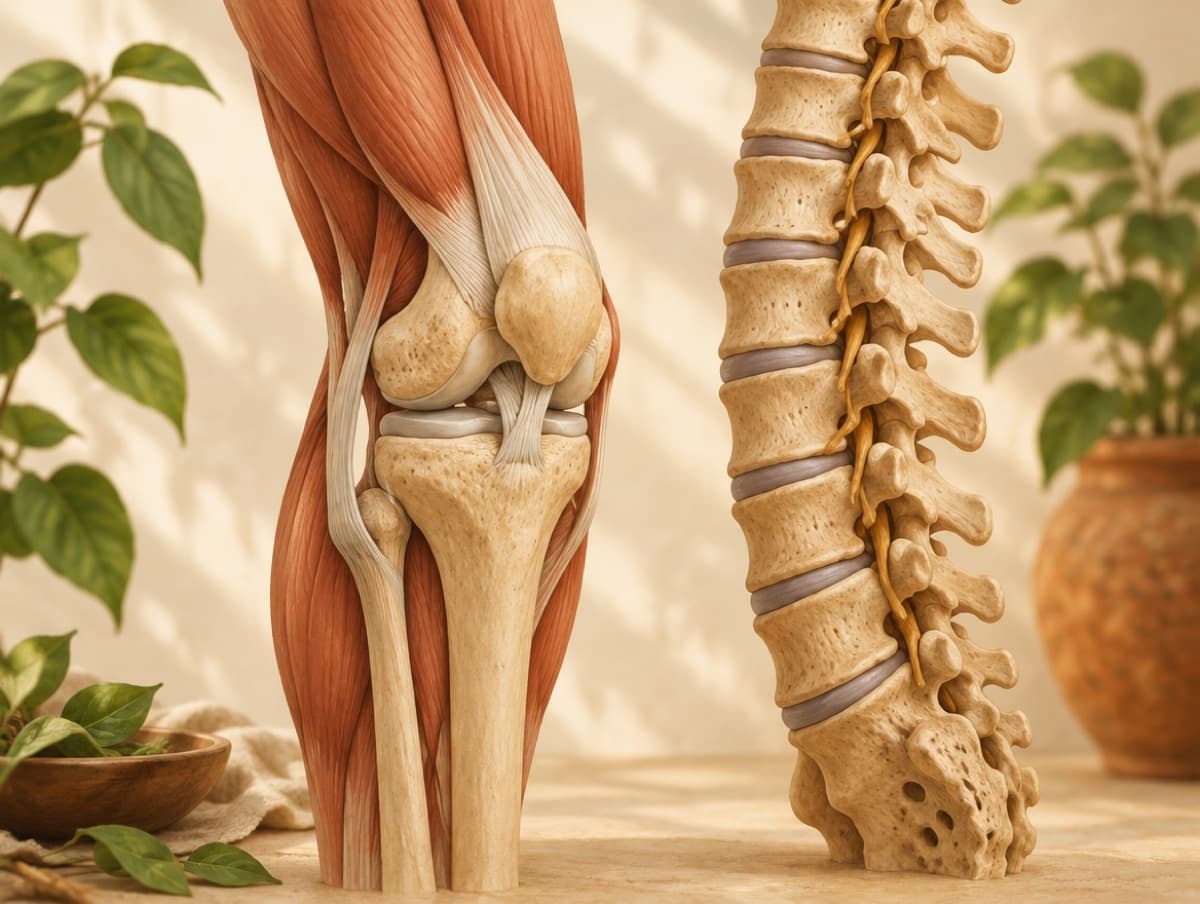
For arthritis the answer depends on the type. Rheumatoid and other inflammatory arthritis need a rheumatologist and disease-modifying drugs early, because untreated inflammation damages joints. Ayurveda is a reasonable lead for early osteoarthritis and a useful partner in rheumatoid arthritis, treating Ama and Vata with diet, formulations and Panchakarma alongside prescribed medication, never in place of it.
01
The two ways of reading arthritis
Arthritis is not one disease. Osteoarthritis is wear in the cartilage of a weight-bearing joint, most often the knee, hip or spine. Rheumatoid arthritis is an autoimmune inflammation that attacks the joint lining and, left alone, deforms it within years. Conventional medicine treats these very differently, and so does Ayurveda, which reads osteoarthritis as Sandhivata and rheumatoid arthritis as Amavata, a disease of Ama, the undigested residue of weak Agni, lodging in the joints.
Dr. Arvinder Singh Bali sees both kinds in Chandigarh and by video consultation. He asks every arthritis patient for their blood results and imaging before treatment, and he does not take patients with rheumatoid arthritis off methotrexate or biologics. The comparison below reflects that position.
02
Side by side
- How the condition is understood
Classical Ayurveda
Osteoarthritis is Sandhivata, Vata drying the joint tissue. Rheumatoid arthritis is Amavata, Ama produced by weak Agni carried by Vata into the joints, described in the Madhava Nidana.
Conventional medicine
Osteoarthritis is cartilage loss with bone changes, driven by age, load and injury. Rheumatoid arthritis is autoimmune synovitis, confirmed by antibodies and inflammatory markers.
- First-line treatment
Classical Ayurveda
Diet to correct Agni and clear Ama, warm oil massage (Abhyanga) and fomentation (Swedana), and formulations such as Yogaraja Guggulu, Trayodashanga Guggulu, Dashamoola and Guduchi chosen by pattern.
Conventional medicine
Paracetamol, NSAIDs and physiotherapy for osteoarthritis. For rheumatoid arthritis, methotrexate or another DMARD started early, with a short course of steroids to settle the flare.
- Time to relief
Classical Ayurveda
Stiffness and pain usually ease over four to eight weeks of formulations and Panchakarma. Rebuilding joint function and reducing flares takes months and ongoing diet.
Conventional medicine
NSAIDs and steroids act within hours to days. DMARDs take eight to twelve weeks to work. Joint replacement relieves osteoarthritis pain within weeks of surgery.
- Approach to root cause
Classical Ayurveda
Ama and Agni are treated in every case, with Panchakarma (Basti in particular) to clear Vata. The aim is fewer flares and slower progression, not symptom cover alone.
Conventional medicine
For rheumatoid arthritis, DMARDs and biologics suppress the immune process that causes damage, which is a direct action on the cause. For osteoarthritis, treatment is largely symptomatic until replacement.
- Procedures or surgery
Classical Ayurveda
Panchakarma courses in Chandigarh: Basti, Abhyanga, Swedana and, where indicated, Virechana. Agnikarma for localized pain in some cases. No joint surgery.
Conventional medicine
Intra-articular steroid or hyaluronic acid injections, arthroscopy, and knee or hip replacement, which is highly effective for advanced osteoarthritis. Synovectomy or joint fusion in some rheumatoid cases.
- Side effects and monitoring
Classical Ayurveda
Guggulu preparations can upset digestion in some patients and are adjusted. Panchakarma needs supervision and is not given during an acute flare with fever. No blood monitoring is required for plant-based formulations, though Dr. Bali reviews existing results.
Conventional medicine
NSAIDs risk stomach bleeding, kidney strain and raised blood pressure with long use. Methotrexate needs regular liver and blood count checks. Biologics raise infection risk and need TB screening.
- Diet and lifestyle role
Classical Ayurveda
Central. Warm, easily digested food, avoidance of Ama-forming combinations, regular movement and sleep are prescribed and reviewed at every visit.
Conventional medicine
Weight loss and exercise are strongly advised for osteoarthritis and have good evidence. Diet has a small role in rheumatoid guidance beyond general health.
- Diagnostics used
Classical Ayurveda
History, joint examination, Nadi and tongue assessment, Prakriti and Vikriti. Dr. Bali asks for X-rays, ESR, CRP, rheumatoid factor and anti-CCP where they have not been done.
Conventional medicine
X-ray, MRI, ultrasound, ESR, CRP, rheumatoid factor, anti-CCP and uric acid. Clearly the stronger system for telling the types of arthritis apart, which decides everything else.
- Long-term management
Classical Ayurveda
Seasonal Panchakarma where practical, a maintenance formulation, and diet kept in place. Review every two to three months, by video for patients abroad.
Conventional medicine
Lifelong DMARD or biologic therapy for rheumatoid arthritis with routine bloods. For osteoarthritis, staged escalation from physiotherapy to injections to replacement.
- Cost and access
Classical Ayurveda
Consultation and formulations, with fees confirmed at booking. Panchakarma requires a stay in Chandigarh. Formulations ship internationally with a certificate of analysis.
Conventional medicine
Widely available. Biologics are expensive and access depends on insurance or public funding. Joint replacement involves waiting lists in many public systems.
03
When conventional medicine should lead
- A hot, swollen, very painful single joint with fever, which may be an infected joint and is an emergency.
- Morning stiffness lasting over an hour, swelling in several small joints, or a positive rheumatoid factor or anti-CCP: see a rheumatologist and start a DMARD early, since delay costs joint tissue.
- Rheumatoid arthritis already controlled on methotrexate or a biologic: continue it, and add Ayurveda alongside rather than instead.
- Advanced osteoarthritis with bone-on-bone change, night pain and loss of walking distance, where joint replacement gives reliable relief.
- Sudden weakness, numbness or bladder change with spinal arthritis, which needs urgent imaging.
04
When Ayurveda is a reasonable step
- Early to moderate osteoarthritis where you want to reduce NSAID use and slow decline before replacement is needed.
- Rheumatoid arthritis stable on medication, with residual stiffness, fatigue or digestive trouble that the drugs do not address.
- Recurring flares despite conventional care, once your rheumatologist has confirmed the disease is monitored.
- Joint pain with clear digestive signs, heaviness after meals, coated tongue or irregular bowel, which point to Ama.
- You want a diet and routine built around your Prakriti rather than a general leaflet.
05
How the two work together
Dr. Bali treats arthritis alongside the patient's rheumatologist or orthopaedic surgeon, not around them. He never asks a patient to stop methotrexate, a biologic, or any prescribed drug, and he asks for the latest blood results and imaging before writing a plan. In rheumatoid arthritis the Ayurvedic work is aimed at Ama, digestion, stiffness and flare frequency, which are the parts that immune suppression leaves open.
If the Ayurvedic plan reduces pain to the point where NSAID use can drop, that change is made with the prescribing doctor, and the patient's bloods stay on their normal schedule. Where the joint has reached the stage that needs replacement, Dr. Bali says so and supports recovery afterwards. Patients abroad are reviewed by video every two to three months, with reports shared as they arrive.
06
Frequently asked questions
Is Ayurveda better than allopathy for arthritis?
Not as a blanket rule. For rheumatoid and other inflammatory arthritis, conventional DMARDs and biologics are essential because they stop joint damage. For early to moderate osteoarthritis, and as an addition in rheumatoid arthritis, Ayurveda offers treatment of Ama, Agni and Vata that conventional care does not. Most patients benefit from using both.
Can I take Ayurvedic medicine with methotrexate?
Usually yes, with two conditions: your rheumatologist knows, and your liver and blood count monitoring continues on schedule. Dr. Bali chooses plant-based formulations with a long record of use, and adjusts the plan if any result changes. Methotrexate is never stopped on his advice.
Can Ayurveda treat rheumatoid arthritis?
Ayurveda treats rheumatoid arthritis as Amavata and can reduce stiffness, digestive symptoms and flare frequency in many patients. It does not replace disease-modifying drugs, which are the proven way to prevent joint destruction. The two are used together.
Can Ayurveda help me avoid knee replacement?
For early and moderate osteoarthritis, treating Vata and Ama with Panchakarma, formulations and diet may delay the need for surgery in many patients. Once the joint is bone-on-bone with night pain and a short walking distance, replacement is the reliable option, and Dr. Bali will say so rather than promise otherwise.
Is Ayurvedic treatment for arthritis safe with NSAIDs?
Yes, and one aim of treatment is to reduce how often you need them. Long-term NSAID use carries stomach, kidney and blood pressure risks, so any reduction is a benefit. Changes to NSAID dosing are made with your prescribing doctor rather than by stopping them on your own.
How long does Ayurvedic treatment for arthritis take?
Pain and stiffness usually ease over four to eight weeks. A meaningful reduction in flares and improvement in function takes three to six months of formulations, diet and, where practical, a Panchakarma course. Long-standing rheumatoid arthritis takes longer than early osteoarthritis.

Written and reviewed by
Dr. Arvinder Singh Bali, BAMS
22+ years of clinical practice · 3,00,000+ patients · Government Ayurvedic College, Punjab
Dr. Arvinder Singh Bali is a BAMS qualified classical Ayurvedic physician with over 22 years of clinical practice in Chandigarh, Punjab, India, who has treated 3,00,000+ patients and provides online Ayurvedic consultations through Calmvida to patients in the USA, Canada, UK, Australia, UAE, Russia and Uzbekistan.
Last updated 3 September 2026
Bring your reports. Get a plain answer.
Dr. Bali will tell you whether Ayurveda is the right first step for your case, or whether your specialist should lead.