
Joints & spine
Ayurvedic Treatment for Arthritis and Joint Pain

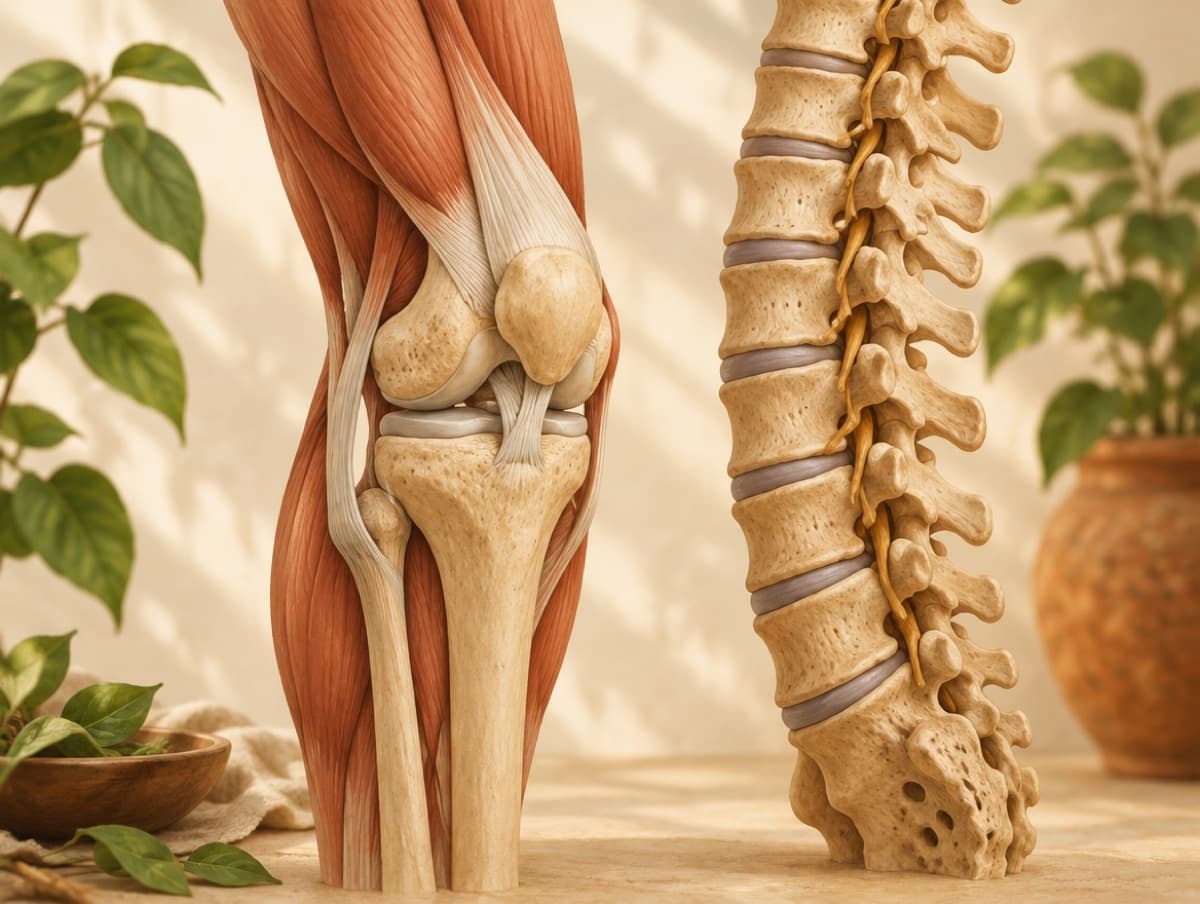
Ayurveda separates two arthritis patterns: Sandhivata, the dry wearing of joints that matches osteoarthritis, and Amavata, the inflammatory, migrating joint disease that resembles rheumatoid arthritis. Each is treated differently, with Guggulu formulations, diet to correct Agni, medicated oils, Pinda Sveda and Basti as indicated. Dr. Bali assesses which pattern you have, and your reports, before prescribing.
01
Who this page is for
- Knee, hip or hand pain diagnosed as osteoarthritis, where painkillers are the only plan offered.
- Rheumatoid arthritis on disease-modifying drugs, where you want fewer flares and less stiffness alongside your rheumatologist's care.
- Morning stiffness, swelling and joint pain that moves from joint to joint.
- Joint pain with poor digestion, heaviness and fatigue, which points to Amavata.
- Early joint wear where you want to slow the process and put off replacement surgery for as long as possible.
02
How Dr. Bali approaches arthritis and joint pain
Classical Ayurveda does not treat all joint pain as one disease. Sandhivata (Sandhigata Vata) is a Vata disorder of the joint itself: the lubricating tissue dries, the joint cracks and aches on movement, and it worsens with age, cold and overuse. Amavata is different. Weak Agni produces Ama, an undigested residue that circulates and lodges in the joints, where Vata carries it from one to another, causing swelling, heat and stiffness worst in the morning.
The distinction changes everything. Sandhivata is treated by oiling and nourishing: Mahanarayana Taila, Basti, Pinda Sveda and Guggulu formulations. Amavata is treated in the opposite order: light diet, dry heat, digestive and bitter formulations to clear Ama first, and only then oiling. Dr. Bali reads pulse, tongue, digestion and your reports to place each case.
Classical reference · Sandhivata · Amavata
Madhava Nidana is the first text to describe Amavata as a separate disease: it names incompatible food, exertion after a heavy meal and weak digestion as causes, and pain and swelling that move between the joints of the hands, feet, ankles, knees and hips as the signs. Charaka's Vatavyadhi chapter describes joint-seated Vata as a swelling that feels like a bag filled with air, painful on flexion and extension, and treats it with oil, heat and Basti.
Madhava Nidana, Amavata Nidana; Charaka Samhita, Chikitsa Sthana, chapter 28 (Vatavyadhi Chikitsa) for Sandhigata Vata
What the assessment looks at
- Which pattern is present: dry, cracking joints that worsen with use, or swollen, stiff joints that worsen in the morning and move around.
- Your existing reports: X-rays, ESR, CRP, rheumatoid factor, anti-CCP and uric acid, and any medicines you take.
- Agni and Ama: appetite, coating on the tongue, heaviness after meals, and bowel habit.
- Weight, activity, occupation and the joints under most load.
- Prakriti and Vikriti from pulse and tongue, and the season your pain follows.
When to see a doctor locally first
A single hot, swollen, very painful joint with fever may be a joint infection and needs a hospital the same day. Sudden joint pain after a fall or injury, rapid deformity, numbness or weakness in a limb, or joint pain with rash, eye pain or breathlessness need a local doctor first. If you have rheumatoid arthritis, do not stop disease-modifying drugs without your rheumatologist. Dr. Bali will ask for your reports before treatment.
03
What treatment may include
- 01
Clearing Ama where Amavata is present
A light, warm, easily digested diet with digestive formulations such as Musta and Guduchi, and dry fomentation, for the first weeks, so that later oiling does not feed the disease.
- 02
Guggulu formulations
Yogaraja Guggulu, Kaishore Guggulu or Trayodashanga Guggulu depending on the pattern, with Dashamoola and Ashwagandha for Vata, dispensed with a certificate of analysis. Plant-based formulations are prescribed for patients abroad.
- 03
External oil and heat
Mahanarayana Taila massage and Pinda Sveda, a bolus fomentation with medicated rice or herbs, to nourish worn joints and ease stiffness. Given as a course in Chandigarh, with a home routine for online patients.
- 04
Basti
Medicated enema, the principal Vata therapy, given as a supervised course in Chandigarh for Sandhivata, and for Amavata once Ama has cleared. It is the classical treatment for joint-seated Vata.
- 05
Diet and daily routine
Foods that suit the pattern, meal timing, warmth, and joint-friendly movement, because arthritis is managed as much at the table as in the clinic.
- 06
Follow-up and coordination
A review at four to six weeks, then quarterly. Patients on disease-modifying drugs stay on them; Dr. Bali works alongside your rheumatologist rather than replacing them.
The combination is set after assessment, not before. Dr. Bali does not recommend the same protocol for every patient with the same diagnosis.
04
Formulations, shipping and the law
Formulations Dr. Bali prescribes are dispensed in India and shipped to patients abroad by tracked courier, typically within 7 to 14 days. Each parcel carries an itemised invoice, an ingredient declaration and the batch certificate of analysis. Patients in India receive them by courier within 2 to 4 days, or collect them at the Chandigarh clinic.
- Every batch is tested by an independent laboratory for identity, heavy metals, pesticides and microbial contamination. The certificate ships with the parcel and is emailed to you.
- Mineral-based classical preparations (Bhasma) are not shipped internationally. Dr. Bali prescribes plant-based formulations for patients abroad.
- Shipments stay within a three-month supply so they clear customs as personal-use supplements. Country-specific rules are on each country page.
- In-clinic procedures such as Basti, Ksharasutra and full Panchakarma are given in Chandigarh; the assessment, diet and formulations can be managed by video.
- Consultation fees are confirmed at booking. Formulation costs are quoted before anything is dispensed.
Dr. Bali is licensed to practise Ayurveda in India. For patients abroad, an online consultation is an Ayurvedic assessment with guidance on diet, routine and classical formulations; it does not replace your local doctor, and prescribed medication is never stopped without the prescriber's agreement.
Related conditions
Comparison
Ayurveda vs Allopathy for Arthritis: An Honest Comparison
For arthritis the answer depends on the type. Rheumatoid and other inflammatory arthritis need a rheumatologist and disease-modifying drugs early, because untreated inflammation damages joints. Ayurveda is a reasonable lead for early osteoarthritis and a useful partner in rheumatoid arthritis, treating Ama and Vata with diet, formulations and Panchakarma alongside prescribed medication, never in place of it.
05
Frequently asked questions
Can Ayurveda treat arthritis without painkillers?
For many patients with osteoarthritis, painkiller use falls once the joint is oiled, nourished and unloaded, though this takes weeks rather than days. Rheumatoid arthritis is managed alongside your rheumatologist's drugs, with Ayurveda aimed at fewer flares, less stiffness and clearing Ama. Stopping any prescribed medicine is a decision made with the doctor who prescribed it.
What is the difference between Sandhivata and Amavata?
Sandhivata is dry joint wear: cracking, pain on movement, worse with cold and use, better with oil and warmth. It corresponds broadly to osteoarthritis. Amavata is inflammatory: swelling, heat, stiffness worst in the morning, pain that migrates, and poor digestion. It corresponds broadly to rheumatoid arthritis. They are treated in almost opposite ways, so the first task is to tell them apart.
How long does Ayurvedic treatment for arthritis take?
Stiffness and pain usually begin to ease in four to six weeks. Amavata needs two to three months to clear Ama and settle flares, then maintenance. Osteoarthritis is a long-term condition, so the plan is a course of treatment followed by a diet and routine you keep, with a review each season. Worn cartilage is not rebuilt; the aim is less pain, better movement and slower progression.
Which Ayurvedic medicine is best for joint pain?
It depends on the pattern. Yogaraja Guggulu and Mahanarayana Taila are the classical choices for dry Vata joints. Kaishore Guggulu, Guduchi and Musta suit inflammatory, Ama-driven joints. Ashwagandha and Dashamoola support strength. Taking a Vata formulation for an Amavata joint can make it worse, which is why the medicine is chosen after assessment.
Can I consult for arthritis online from the USA, Canada or the UK?
Yes. Assessment by video, review of your X-rays and blood reports, diet and formulations can all be managed remotely, with plant-based formulations shipped to you with customs documentation. Pinda Sveda and Basti courses are given in Chandigarh; a home oil and heat routine is taught for those who cannot travel.
Is Ayurvedic treatment safe alongside methotrexate or other rheumatoid arthritis drugs?
Usually, with care. Dr. Bali reviews your full medicine list, avoids formulations that add to the liver's load alongside methotrexate, and asks that your rheumatologist's blood monitoring continues. Tell both doctors what you are taking.
Can Ayurveda help avoid knee replacement?
For early and moderate osteoarthritis, many patients get enough pain relief and function from treatment to put surgery off for years. When the joint is bone-on-bone with deformity, replacement is the better option and Dr. Bali will say so.
What does treatment cost?
Consultation fees are confirmed when you book and depend on the consultation type. Formulation and in-clinic course costs depend on the plan and are quoted before anything is dispensed or scheduled.

Written and reviewed by
Dr. Arvinder Singh Bali, BAMS
22+ years of clinical practice · 3,00,000+ patients · Government Ayurvedic College, Punjab
Dr. Arvinder Singh Bali is a BAMS qualified classical Ayurvedic physician with over 22 years of clinical practice in Chandigarh, Punjab, India, who has treated 3,00,000+ patients and provides online Ayurvedic consultations through Calmvida to patients in the USA, Canada, UK, Australia, UAE, Russia and Uzbekistan.
Last updated 3 September 2026
Consult Dr. Bali about arthritis and joint pain.
In-clinic in Chandigarh or by secure video from anywhere. Bring your reports and a note of what you have already tried.