
Comparison · Piles (haemorrhoids)
Ayurveda vs Allopathy for Piles: An Honest Comparison

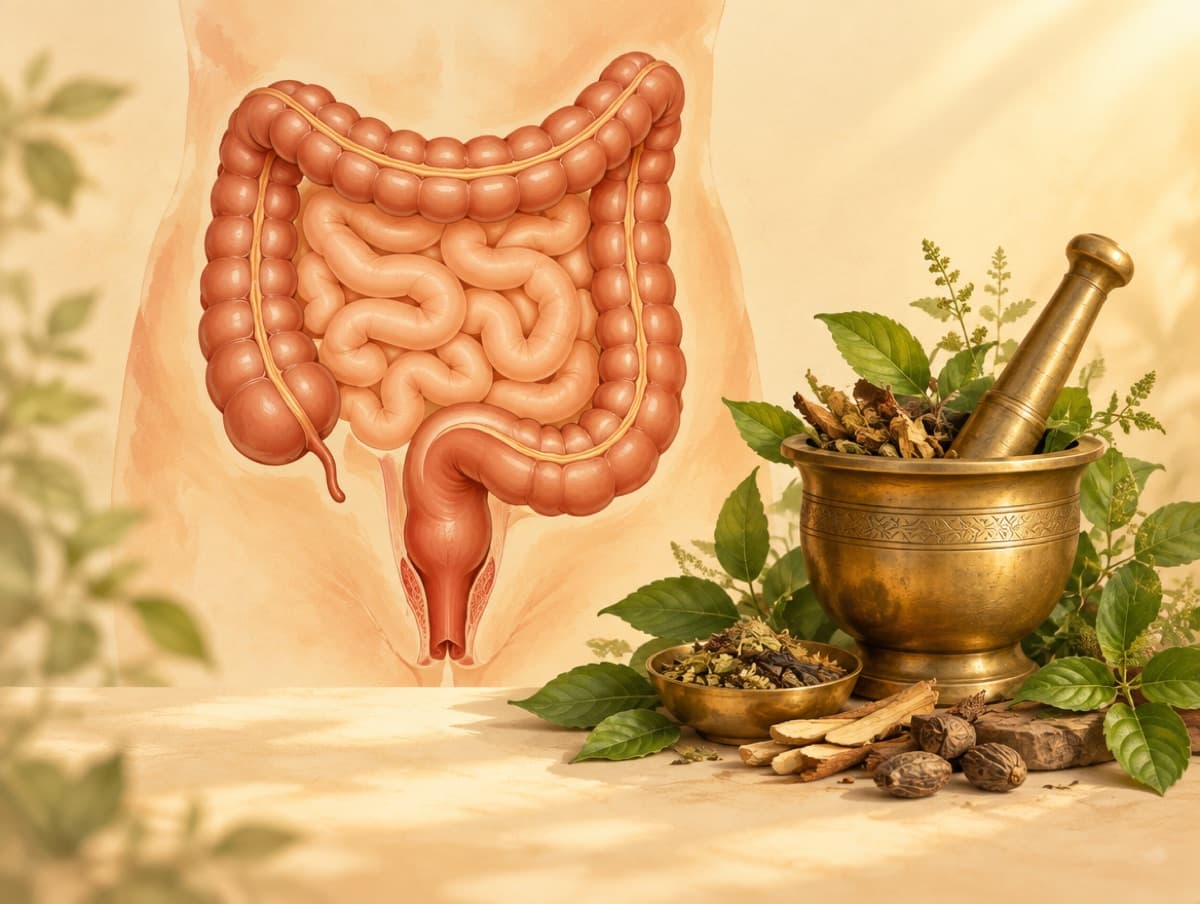
Neither system is better for every case of piles. Conventional medicine is faster for thrombosed, grade four or heavily bleeding piles, where banding or surgery is the right call. Ayurveda suits grade one to three piles by correcting constipation and Agni, using formulations and Ksharasutra where needed, and aims for lower recurrence. Many patients use both.
01
The two ways of reading piles (haemorrhoids)
Piles are one of the conditions where both systems have a long record and a clear place. A colorectal surgeon can band a bleeding pile in minutes and remove a grade four pile in an afternoon. An Ayurvedic physician treats the constipation and weak digestion that produced the pile, and shrinks the mass with formulations or a medicated thread. The honest question is not which system wins but which one should go first for your grade and your history.
This page sets the two side by side without favouring either. Dr. Arvinder Singh Bali has treated piles for over twenty years in Chandigarh and by video consultation, and refers patients to a surgeon when their case needs one. The comparison below reflects what he tells patients in the consulting room.
02
Side by side
- How the condition is understood
Classical Ayurveda
Arsha, a disorder of weak Agni and constipation in which straining loads the rectal veins. The mass is the result, not the cause, and cases are classified by Dosha pattern.
Conventional medicine
Swollen vascular cushions in the anal canal, graded one to four by how far they prolapse. Linked to straining, constipation, pregnancy and prolonged sitting.
- First-line treatment
Classical Ayurveda
Diet timing, fibre and fluid guidance, Triphala or Haritaki for stool, and formulations such as Arshoghni Vati or Nagakeshara for bleeding. Medicated sitz baths and Jatyadi Taila for local symptoms.
Conventional medicine
Fibre supplements, stool softeners, topical creams containing hydrocortisone or a local anaesthetic, and sitz baths. Flavonoid tablets are prescribed in some countries.
- Time to relief
Classical Ayurveda
Bleeding and burning usually settle within two to four weeks once bowel habit is corrected. Shrinking the mass takes two to three months of formulations and diet.
Conventional medicine
Creams ease pain and itching within days. Banding gives relief within one to two weeks. Surgery resolves the pile at once, followed by a painful recovery of two to four weeks.
- Approach to root cause
Classical Ayurveda
Agni and bowel habit are treated in every case, whichever procedure is chosen. If they are left alone, recurrence is expected.
Conventional medicine
Fibre and avoiding straining are advised, but treatment centres on the pile itself. Recurrence after banding is common and repeat banding is routine.
- Procedures or surgery
Classical Ayurveda
Ksharasutra ligation for grade two and three piles that do not settle with medicine, a minor in-clinic procedure. Kshara application and Agnikarma are also described in the Sushruta Samhita.
Conventional medicine
Rubber band ligation, sclerotherapy and infrared coagulation for grade one to three. Haemorrhoidectomy or stapled haemorrhoidopexy for grade four and thrombosed piles, where they are clearly the right tool.
- Side effects and monitoring
Classical Ayurveda
Formulations are generally well tolerated; a purgative dose set too high causes loose stool. Ksharasutra needs dressings and review for one to two weeks.
Conventional medicine
Steroid creams thin the skin with long use. Banding can cause pain and bleeding. Haemorrhoidectomy carries risks of pain, urinary retention, bleeding and, rarely, incontinence.
- Diet and lifestyle role
Classical Ayurveda
Central. Meal timing, foods chosen by Dosha, fluid and toilet habit are prescribed as treatment rather than offered as advice.
Conventional medicine
Recommended. Fibre, fluid and avoiding straining are advised, usually in a leaflet rather than a plan that is reviewed.
- Diagnostics used
Classical Ayurveda
History, visual examination, Nadi and tongue assessment, Prakriti and Vikriti. Dr. Bali refers for colonoscopy where any red flag is present.
Conventional medicine
Digital rectal examination, proctoscopy, and colonoscopy when bleeding needs bowel cancer excluded. Clearly the stronger system for ruling out serious disease.
- Long-term management
Classical Ayurveda
Bowel habit and Agni are kept corrected with diet and, where needed, a low dose of Triphala. Review at four to six weeks, then as needed.
Conventional medicine
Discharge after the procedure with lifestyle advice. Patients return if symptoms recur, often for repeat banding.
- Cost and access
Classical Ayurveda
Consultation and formulations, with fees confirmed at booking. Video consultation from anywhere; Basti and Ksharasutra require a visit to Chandigarh.
Conventional medicine
Widely available through GPs and colorectal clinics. Surgery may mean a waiting list in public systems or a significant bill in private ones.
03
When conventional medicine should lead
- Rectal bleeding after the age of 45, bleeding with weight loss or a change in bowel habit, or a family history of bowel cancer: see a doctor and have a colonoscopy before any Ayurvedic treatment.
- A sudden, very painful hard lump at the anus, which may be a thrombosed pile needing urgent care.
- Grade four piles that stay prolapsed, or anemia from ongoing blood loss.
- Black or tarry stool, fever, or pus, which point to something other than simple piles.
- Piles in pregnancy, where your obstetrician should lead and Ayurvedic diet and local care are added only with their agreement.
04
When Ayurveda is a reasonable step
- Grade one to three piles where surgery has been suggested but you want to try a conservative route first, once serious disease has been excluded.
- Piles that return after banding, creams or sitz baths.
- Chronic constipation or straining that you suspect is the driver.
- Bleeding, itching or burning that responds to creams only for as long as you use them.
- You want a plan that addresses bowel habit and digestion rather than the mass alone.
05
How the two work together
Dr. Bali does not ask patients to stop any prescribed medication or cancel a planned procedure. If a colorectal surgeon has recommended banding or surgery, he will say whether an Ayurvedic route is reasonable first, and for grade four or thrombosed piles he will say it is not. Patients who have had a colonoscopy are asked to share the report so the assessment starts from established facts rather than assumptions.
After banding or haemorrhoidectomy, Ayurvedic treatment can take on the part that conventional care leaves open: bowel habit, Agni and diet, so the piles are less likely to return. Dr. Bali coordinates with the patient's GP or surgeon where needed and reviews progress at four to six weeks. Any new bleeding or a change in the pattern is referred back for examination rather than treated blind.
06
Frequently asked questions
Is Ayurveda better than allopathy for piles?
It depends on the grade. For thrombosed, grade four or heavily bleeding piles, conventional surgery is faster and safer. For grade one to three piles, Ayurveda offers a conservative route that treats the constipation behind the pile and often avoids surgery. Dr. Bali will tell you which applies after assessment.
Can Ayurveda treat piles without surgery?
Often, yes, for grade one to three piles. Correcting bowel habit, formulations and local care settle most early cases, and Ksharasutra ligation handles many that do not. Grade four and thrombosed piles usually need a surgeon, and Dr. Bali says so at the first consultation.
Can I use Ayurvedic medicine for piles with the cream my doctor prescribed?
Yes. Topical creams and Ayurvedic formulations work on different things: the cream on local pain and swelling, the formulation on bowel habit and the pile mass. Tell Dr. Bali what you are using so the plan accounts for it. Long-term steroid cream use is usually tapered as symptoms settle, with your doctor's agreement.
Should I have banding or try Ayurveda first?
If a colonoscopy or proctoscopy has excluded anything serious and your piles are grade one to three, trying Ayurvedic treatment for two to three months is reasonable and does not close the door on banding. If you are losing enough blood to be anemic, or the pile stays prolapsed, banding or surgery should come first.
Which is better for piles, Ksharasutra or haemorrhoidectomy?
They suit different grades. Ksharasutra is a minor in-clinic ligation for grade two and three piles, done under local anaesthesia with a short recovery. Haemorrhoidectomy is the standard for grade four and thrombosed piles and for cases where ligation has failed. Neither replaces the other.
Do piles come back after allopathic treatment?
They can, by any system, if the constipation and straining that caused them continue. Recurrence after banding is common enough that repeat banding is routine. Ayurvedic follow-up after a conventional procedure is aimed at the bowel habit and Agni so that recurrence is less likely.

Written and reviewed by
Dr. Arvinder Singh Bali, BAMS
22+ years of clinical practice · 3,00,000+ patients · Government Ayurvedic College, Punjab
Dr. Arvinder Singh Bali is a BAMS qualified classical Ayurvedic physician with over 22 years of clinical practice in Chandigarh, Punjab, India, who has treated 3,00,000+ patients and provides online Ayurvedic consultations through Calmvida to patients in the USA, Canada, UK, Australia, UAE, Russia and Uzbekistan.
Last updated 3 September 2026
Bring your reports. Get a plain answer.
Dr. Bali will tell you whether Ayurveda is the right first step for your case, or whether your specialist should lead.