
Anorectal
Ayurvedic Treatment for Piles Without Surgery

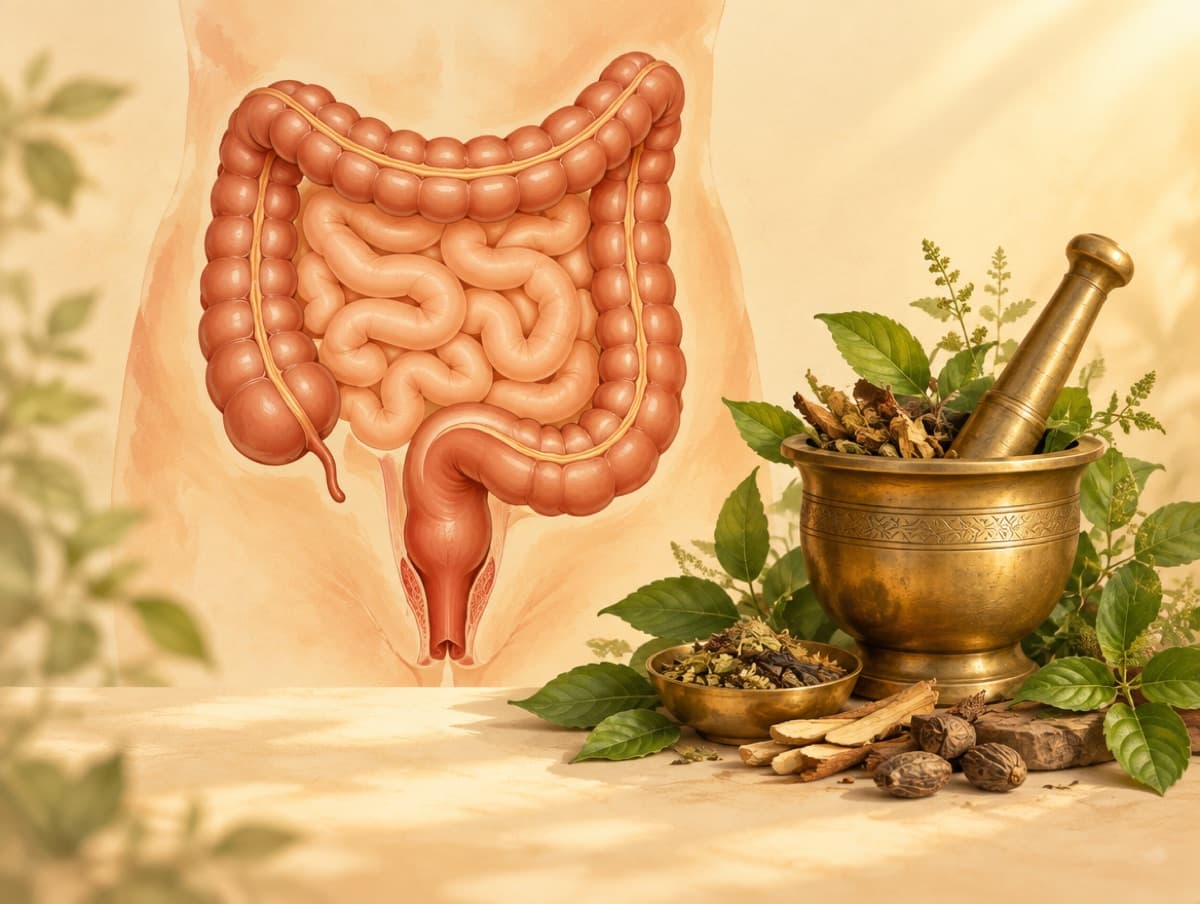
Ayurveda treats piles (Arsha) by correcting the sluggish digestion and constipation that keep the rectal veins under pressure, then shrinking the pile mass with herbal formulations, Basti and, for suitable grades, Ksharasutra ligation. Dr. Bali assesses grade, bleeding, Dosha pattern and bowel habit before recommending a plan. Many patients with grade one and two piles are managed without surgery.
01
Who this page is for
- Recurring bleeding, itching or a lump at the anus that has been diagnosed as piles.
- Grade one to three piles where surgery has been suggested but you want to try a conservative route first.
- Piles that keep returning after ointments, sitz baths or banding.
- Chronic constipation or straining that you suspect is driving the problem.
- Piles during or after pregnancy, once your obstetrician has cleared you for treatment.
02
How Dr. Bali approaches piles
In classical Ayurveda piles are Arsha, and the Sushruta Samhita treats them as a disease of Agni first and of the anal canal second. Weak digestion produces hard stool and straining, straining loads the rectal veins, and the pile mass follows. Treating only the mass leaves the cause in place, which is why piles so often return.
Dr. Bali reads each case by Dosha. Vata-type piles are dry, hard and painful with constipation; Pitta-type bleed, burn and inflame; Kapha-type are large, pale and slow. The pattern decides the diet, the formulation and whether a procedure is useful at all.
Classical reference · Arsha
Sushruta describes four lines of treatment for Arsha: medicine (Bheshaja) for early and mild piles, caustic alkali application (Kshara) for soft and raised piles, cautery (Agnikarma) for hard piles, and excision (Shastra) for the rest. Charaka adds that Agni must be corrected in every case, whichever line is chosen.
Sushruta Samhita, Chikitsa Sthana, chapter 6 (Arsha Chikitsa); Charaka Samhita, Chikitsa Sthana, chapter 14
What the assessment looks at
- Grade of the piles, bleeding pattern, and whether they prolapse or reduce.
- Bowel habit: frequency, straining, stool form, and how long the constipation has been there.
- Agni and diet: meal timing, fibre, spices, alcohol, and how food is digested.
- Dosha pattern of the piles and your underlying Prakriti.
- Any red flags that need a colonoscopy or a surgeon first (see the note below).
When to see a doctor locally first
Rectal bleeding after the age of 45, bleeding with weight loss or a change in bowel habit, black stool, severe pain with a hard swelling, or a family history of bowel cancer need a local doctor and, usually, a colonoscopy before any Ayurvedic treatment. Dr. Bali will ask about these first.
03
What treatment may include
- 01
Correcting bowel habit and Agni
Diet timing, fibre and fluid guidance suited to your Dosha pattern, with mild formulations such as Triphala or Haritaki to make the stool soft without dependence on laxatives.
- 02
Herbal formulations for the pile mass
Classical preparations built around Nagakeshara, Arshoghni Vati and Abhayarishta where indicated, chosen for your bleeding and Dosha pattern, and dispensed with a certificate of analysis.
- 03
Local care
Medicated sitz baths and topical preparations such as Jatyadi Taila to settle burning, itching and small fissures that often accompany piles.
- 04
Basti where constipation is entrenched
A short course of medicated enema (Basti), the principal Vata therapy in Ayurveda, when long-standing constipation is the driver. Given in Chandigarh under supervision.
- 05
Ksharasutra for suitable grades
For grade two and three piles that do not settle with medicine, the classical medicated thread ligation performed in-clinic. It is a minor procedure, not open surgery, with a long record of use in Indian Ayurvedic hospitals.
- 06
Follow-up
A review at four to six weeks to adjust the formulation and diet, then as needed. Online patients are followed by video with prescribed formulations shipped to them.
The combination is set after assessment, not before. Dr. Bali does not recommend the same protocol for every patient with the same diagnosis.
04
Formulations, shipping and the law
Formulations Dr. Bali prescribes are dispensed in India and shipped to patients abroad by tracked courier, typically within 7 to 14 days. Each parcel carries an itemised invoice, an ingredient declaration and the batch certificate of analysis. Patients in India receive them by courier within 2 to 4 days, or collect them at the Chandigarh clinic.
- Every batch is tested by an independent laboratory for identity, heavy metals, pesticides and microbial contamination. The certificate ships with the parcel and is emailed to you.
- Mineral-based classical preparations (Bhasma) are not shipped internationally. Dr. Bali prescribes plant-based formulations for patients abroad.
- Shipments stay within a three-month supply so they clear customs as personal-use supplements. Country-specific rules are on each country page.
- In-clinic procedures such as Basti, Ksharasutra and full Panchakarma are given in Chandigarh; the assessment, diet and formulations can be managed by video.
- Consultation fees are confirmed at booking. Formulation costs are quoted before anything is dispensed.
Dr. Bali is licensed to practise Ayurveda in India. For patients abroad, an online consultation is an Ayurvedic assessment with guidance on diet, routine and classical formulations; it does not replace your local doctor, and prescribed medication is never stopped without the prescriber's agreement.
Comparison
Ayurveda vs Allopathy for Piles: An Honest Comparison
Neither system is better for every case of piles. Conventional medicine is faster for thrombosed, grade four or heavily bleeding piles, where banding or surgery is the right call. Ayurveda suits grade one to three piles by correcting constipation and Agni, using formulations and Ksharasutra where needed, and aims for lower recurrence. Many patients use both.
05
Frequently asked questions
Can piles be treated without surgery?
Often, yes. Grade one and two piles, and many grade three, respond to correcting constipation, herbal formulations and local care. Where the mass does not settle, Ksharasutra ligation is a minor in-clinic procedure rather than open surgery. Grade four piles and thrombosed piles usually need a surgeon, and Dr. Bali will say so.
How long does Ayurvedic treatment for piles take?
Bleeding and burning usually settle within two to four weeks once bowel habit is corrected. Shrinking the mass takes longer, typically two to three months of formulations and diet. Ksharasutra, where used, needs a few weeks of dressing and review.
What is Ksharasutra?
A surgical thread coated with plant alkali (Kshara) and turmeric, tied around the pile or through a fistula tract. It cuts and heals at the same time over one to two weeks. It is described in the Sushruta Samhita and is practised in Indian Ayurvedic hospitals; it is done in-clinic in Chandigarh, not online.
Can I be treated for piles online from the USA, Canada or the UK?
The assessment, diet correction and herbal formulations can all be managed by video consultation, with formulations shipped to you with customs documentation. Procedures such as Basti and Ksharasutra require a visit to Chandigarh. Dr. Bali will tell you at the first consultation which route your case needs.
Which Ayurvedic medicine is best for piles?
There is no single best medicine, because bleeding, dry and prolapsing piles need different formulations. Triphala for bowel habit, Arshoghni Vati and Nagakeshara for bleeding, and Abhayarishta for Kapha-type piles are common choices. The combination is set after assessment, not before.
Will piles come back after Ayurvedic treatment?
Recurrence is lower when the bowel habit and Agni are corrected and kept corrected, which is why the diet and daily routine are part of the plan rather than an afterthought. Piles treated only at the mass, by any system, tend to return.
Is Ayurvedic piles treatment safe during pregnancy?
Diet correction and gentle local care are usually appropriate with your obstetrician's agreement. Purgatives, Basti and procedures are not used in pregnancy. Please tell Dr. Bali if you are pregnant or breastfeeding before any formulation is prescribed.
What does treatment cost?
Consultation fees are confirmed when you book and depend on the consultation type. Formulation costs depend on the plan and are quoted before anything is dispensed, so there are no surprises after the consultation.

Written and reviewed by
Dr. Arvinder Singh Bali, BAMS
22+ years of clinical practice · 3,00,000+ patients · Government Ayurvedic College, Punjab
Dr. Arvinder Singh Bali is a BAMS qualified classical Ayurvedic physician with over 22 years of clinical practice in Chandigarh, Punjab, India, who has treated 3,00,000+ patients and provides online Ayurvedic consultations through Calmvida to patients in the USA, Canada, UK, Australia, UAE, Russia and Uzbekistan.
Last updated 3 September 2026
Consult Dr. Bali about piles.
In-clinic in Chandigarh or by secure video from anywhere. Bring your reports and a note of what you have already tried.