
Anorectal
Ayurvedic Understanding of Fistula

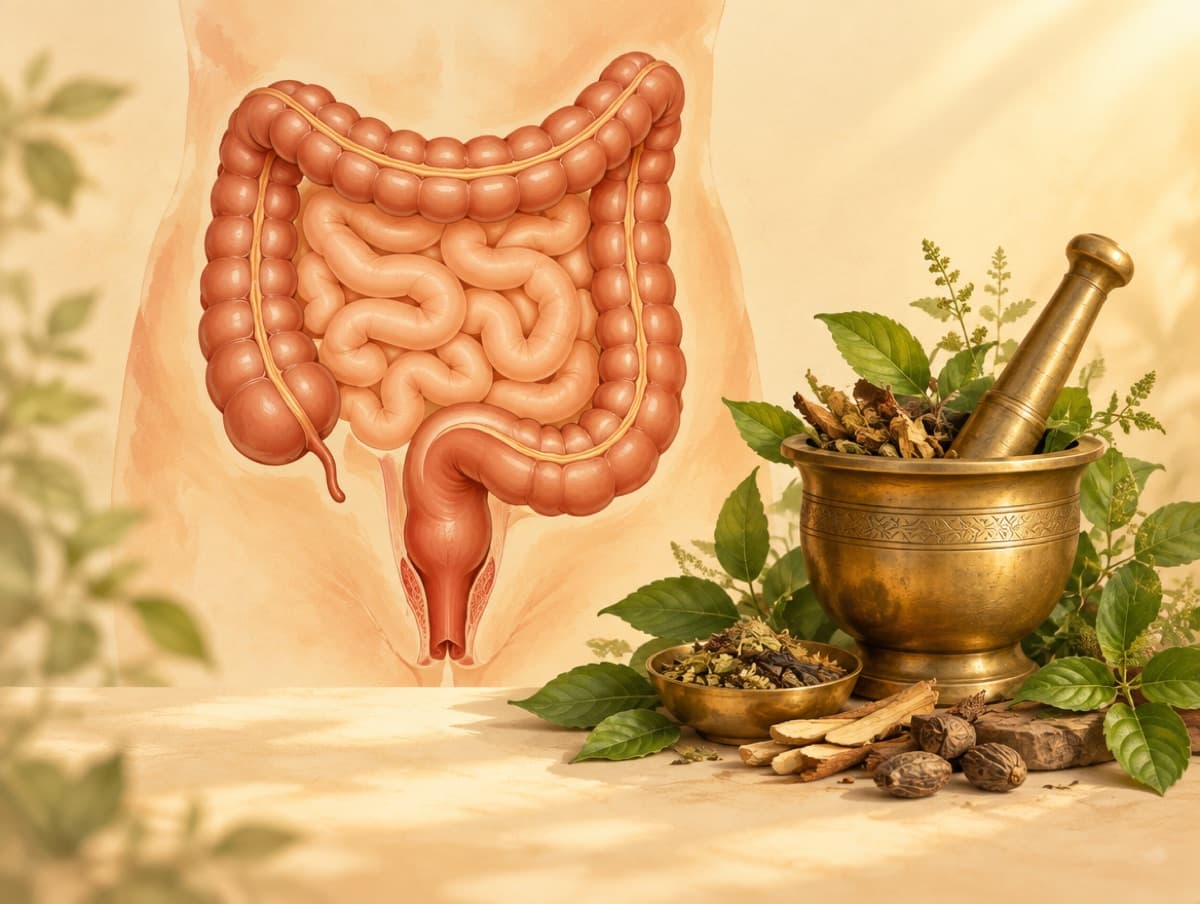
Ayurveda treats fistula-in-ano (Bhagandara) with Ksharasutra, a medicated thread passed through the tract that cuts and heals it gradually over several weeks. It is described in the Sushruta Samhita and practised in Indian Ayurvedic hospitals. Dr. Bali assesses the tract, discharge, previous surgery and Dosha pattern before advising, and prepares the bowel and tissue with diet and formulations first.
01
Who this page is for
- A diagnosed fistula-in-ano with a persistent discharging opening near the anus.
- A fistula that has returned after fistulotomy, seton or another surgical repair.
- An abscess that was drained and has left a tract that will not close.
- Fistula where surgery has been advised and you want the Ksharasutra option explained honestly, including when it is not suitable.
- A high or complex fistula where you are worried about bowel control after surgery.
02
How Dr. Bali approaches fistula-in-ano
The Sushruta Samhita names fistula-in-ano Bhagandara and counts it among the eight great diseases that are difficult to treat. It begins as a boil beside the anus which bursts and leaves a tract that will not close, because it keeps draining and is held open by Vata. Sushruta describes five types by their course and origin, and sets out incision, cautery and Kshara methods for them.
Ksharasutra is the practical descendant of that method. A surgical thread coated with plant alkali and turmeric is passed through the tract and tightened at intervals. The alkali cuts through the tissue slowly while the tract behind it heals, so the sphincter is not divided in one stroke. Dr. Bali assesses the tract by examination and, where needed, an MRI before deciding whether the thread is suitable.
Classical reference · Bhagandara
Sushruta describes the fistula as beginning from a boil beside the anus, classifies it into five types by the direction and nature of the tract, and lays down treatment by incision, probing, Kshara application and cautery once the tract is laid open. The medicated thread method follows the same principle of cutting with alkali rather than a blade, applied gradually.
Sushruta Samhita, Nidana Sthana, chapter 4 (Bhagandara Nidana) and Chikitsa Sthana, chapter 8 (Bhagandara Chikitsa)
What the assessment looks at
- The external opening, the discharge, and how the tract runs in relation to the sphincter, by examination and imaging where needed.
- Previous abscess drainage or surgery, and what was found at the time.
- Bowel habit and Agni, because loose and hard stool both keep a tract irritated.
- Blood sugar, and any history of Crohn's disease or tuberculosis, which change the plan.
- Dosha pattern of the discharge and your underlying Prakriti.
When to see a doctor locally first
A tense, painful swelling beside the anus with fever means an abscess that needs draining now, by a local surgeon, before anything else. Spreading redness, discharge with blood, several external openings, uncontrolled diabetes, or a history of Crohn's disease or tuberculosis need a local doctor and investigations first. Dr. Bali will ask about these before any thread is considered.
03
What treatment may include
- 01
Assessment and imaging
Clinical examination in Chandigarh, and an MRI or ultrasound where the tract is high, branched or recurrent, so that the thread is placed along the true course.
- 02
Preparing the ground
Two to four weeks of diet correction and formulations such as Triphala to settle bowel habit, with Kaishore Guggulu or Guduchi to reduce inflammation before the thread is placed.
- 03
Ksharasutra placement
The medicated thread is passed through the tract and tied under local anesthesia as a day procedure in-clinic. It is changed weekly and cuts through slowly, roughly a centimeter of tract per week, while the tract behind it heals.
- 04
Local care between changes
Sitz baths, Jatyadi Taila and dressing guidance to keep the wound clean and the discharge controlled between weekly thread changes.
- 05
Internal formulations
Wound-healing and Vata-settling formulations, adjusted at each visit and dispensed with a certificate of analysis.
- 06
Follow-up after cut-through
Review until the wound has closed fully, then a check at three months. Patients who travel for the procedure are followed by video after they return home.
The combination is set after assessment, not before. Dr. Bali does not recommend the same protocol for every patient with the same diagnosis.
04
Formulations, shipping and the law
Formulations Dr. Bali prescribes are dispensed in India and shipped to patients abroad by tracked courier, typically within 7 to 14 days. Each parcel carries an itemised invoice, an ingredient declaration and the batch certificate of analysis. Patients in India receive them by courier within 2 to 4 days, or collect them at the Chandigarh clinic.
- Every batch is tested by an independent laboratory for identity, heavy metals, pesticides and microbial contamination. The certificate ships with the parcel and is emailed to you.
- Mineral-based classical preparations (Bhasma) are not shipped internationally. Dr. Bali prescribes plant-based formulations for patients abroad.
- Shipments stay within a three-month supply so they clear customs as personal-use supplements. Country-specific rules are on each country page.
- In-clinic procedures such as Basti, Ksharasutra and full Panchakarma are given in Chandigarh; the assessment, diet and formulations can be managed by video.
- Consultation fees are confirmed at booking. Formulation costs are quoted before anything is dispensed.
Dr. Bali is licensed to practise Ayurveda in India. For patients abroad, an online consultation is an Ayurvedic assessment with guidance on diet, routine and classical formulations; it does not replace your local doctor, and prescribed medication is never stopped without the prescriber's agreement.
Related conditions
05
Frequently asked questions
Can fistula be treated without surgery?
Ksharasutra is a minor procedure rather than open surgery: no tissue is removed with a blade, and the tract is cut gradually while it heals. It is done under local anesthesia as a day case. Some fistulas, particularly those with an abscess that needs draining or a tract linked to Crohn's disease, still need a surgeon, and Dr. Bali will say so at assessment.
How long does Ksharasutra treatment for fistula take?
It depends on the length of the tract. The thread cuts through at roughly a centimeter a week, so a short tract may take four to six weeks and a long or high tract two to three months, with weekly thread changes. The wound then takes a few more weeks to close. Add two to four weeks of preparation before the thread is placed.
Does fistula come back after Ksharasutra?
Recurrence is possible with any fistula treatment, and it is lower when the whole tract has been identified and threaded, which is why imaging is used for complex cases. Keeping the bowel habit regular and controlling blood sugar after healing reduces the chance of a new tract. A recurrence after earlier surgery can often still be threaded.
Is Ksharasutra painful?
Placement is done under local anesthesia. Weekly tightening causes a few hours of discomfort that is managed with sitz baths and prescribed formulations. Most patients continue normal work between changes.
Can I consult for a fistula online from the USA, Canada or the UK?
The first assessment, review of your reports and imaging, and the preparatory diet and formulations can be done by video. The thread itself must be placed and changed in Chandigarh, so plan a stay of several weeks. Some patients complete the later thread changes with a trained Ksharasutra practitioner near home, and Dr. Bali can advise on this.
What is the Ksharasutra thread made of?
A surgical linen thread coated in layers with plant latex, plant alkali (Kshara) and turmeric, then dried and sterilized. The alkali is what cuts and cleans the tract, and the turmeric supports healing. The thread is prepared to a standard used in Indian Ayurvedic hospitals.
Will Ksharasutra affect bowel control?
The slow cut lets the sphincter fibers heal behind the thread as it advances, which is the reason the method is chosen for tracts that cross the muscle. Minor changes in control are uncommon and usually temporary. Dr. Bali discusses the risk for your specific tract before you decide.
What does treatment cost?
Consultation and procedure fees are confirmed when you book and depend on the length of the tract and the number of thread changes expected. Formulation costs are quoted before anything is dispensed.

Written and reviewed by
Dr. Arvinder Singh Bali, BAMS
22+ years of clinical practice · 3,00,000+ patients · Government Ayurvedic College, Punjab
Dr. Arvinder Singh Bali is a BAMS qualified classical Ayurvedic physician with over 22 years of clinical practice in Chandigarh, Punjab, India, who has treated 3,00,000+ patients and provides online Ayurvedic consultations through Calmvida to patients in the USA, Canada, UK, Australia, UAE, Russia and Uzbekistan.
Last updated 3 September 2026
Consult Dr. Bali about fistula-in-ano.
Living with a fistula can be physically and emotionally exhausting. Conventional treatments are not always the right fit for everyone, and many people seek gentler, longer-term approaches that support the body's own healing process.
Ayurveda offers a time-tested perspective on fistula, one that addresses not just the local condition but the underlying imbalances that contribute to it.
If you would like to understand whether Ayurvedic care is appropriate for your situation, Dr. Bali is available for a private online consultation. There is no obligation, just an honest assessment of how Ayurveda may be able to help.