
Anorectal
Ayurvedic Treatment for Anal Fissure

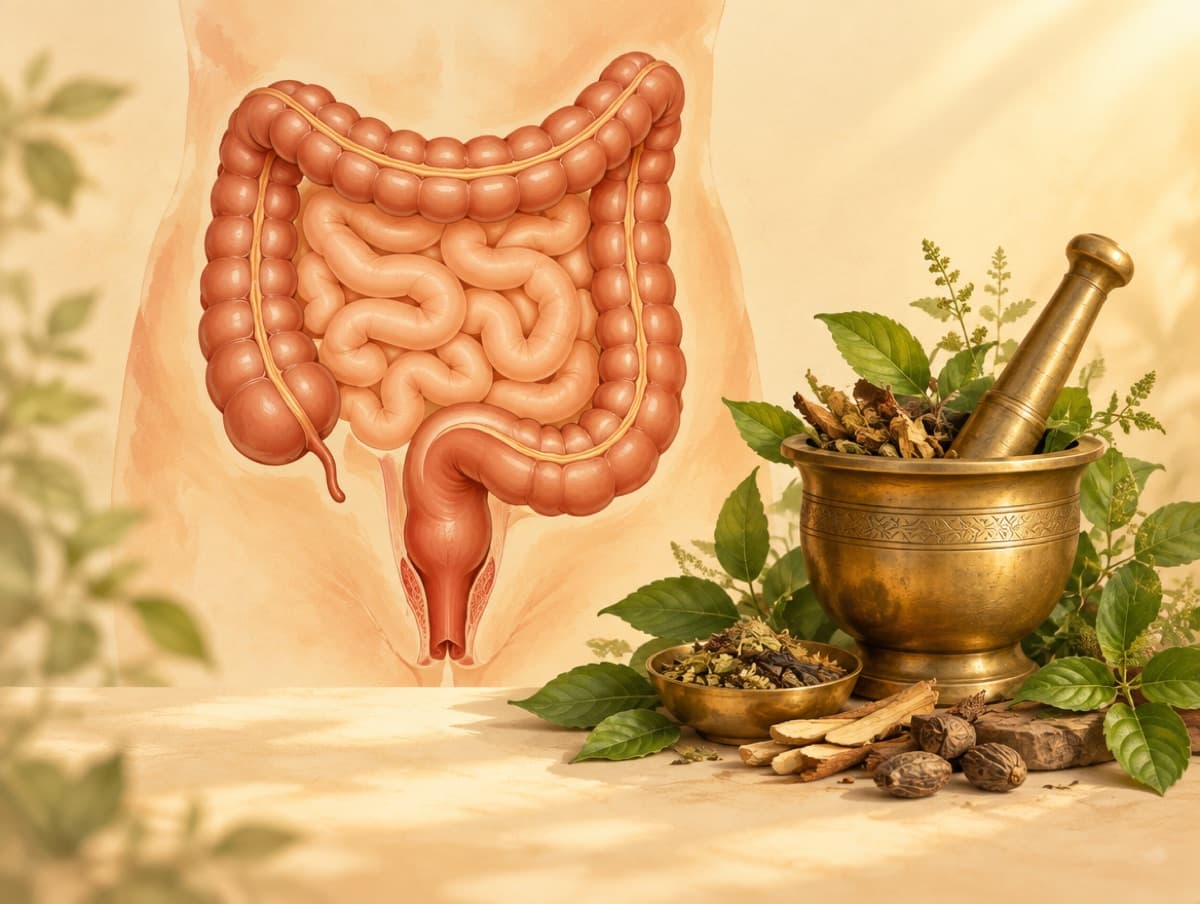
Ayurveda treats anal fissure (Parikartika) by softening the stool and relaxing the sphincter so the tear can close, using diet correction, mild formulations such as Triphala, medicated sitz baths and healing oils such as Jatyadi Taila. Dr. Bali assesses whether the fissure is acute or chronic, bowel habit and Dosha pattern before prescribing. Most acute fissures settle without surgery.
01
Who this page is for
- Sharp pain during and after passing stool, often with a streak of bright red blood on the paper.
- A fissure present for more than six weeks that has become chronic, with a skin tag or a visible tear.
- Fissures that keep reopening after ointments or a course of laxatives.
- Constipation, hard stool or straining that you suspect caused the tear.
- Fissure after childbirth or in pregnancy, once your obstetrician has cleared you for treatment.
02
How Dr. Bali approaches anal fissure
Ayurveda calls anal fissure Parikartika, a cutting pain at the anus. The classical texts read it as a Vata and Pitta disorder: dry, hard stool from weak Agni tears the lining, Pitta inflames the tear, and the pain makes the sphincter tighten, which keeps the stool hard and the wound open. That cycle is why a fissure so often outlasts the constipation that started it.
Dr. Bali reads each case by stage and Dosha. An acute fissure with burning and bright bleeding is Pitta-led and needs cooling and healing. A chronic fissure with a sentinel tag, spasm and dry stool is Vata-led and needs oiling, softening and time. The reading decides the diet, the local preparation and whether Kshara application is worth considering.
Classical reference · Parikartika
Both texts describe Parikartika as a cutting, tearing pain at the anus, listed among the complications of over-strong purgation or a badly given enema, and both treat it with oil enemas, a cooling and unctuous diet and soothing local applications. The principle carried into practice is that a fissure closes when the passage is kept soft and lubricated, not by force.
Sushruta Samhita, Chikitsa Sthana (chapter on complications of Vamana and Virechana); Charaka Samhita, Siddhi Sthana (Basti Vyapat chapters)
What the assessment looks at
- Whether the fissure is acute or chronic, where it sits on the anal margin, and whether there is a sentinel tag or sphincter spasm.
- Bowel habit: stool form, straining, and how long the constipation or hard stool has been present.
- Agni and diet: fiber, fluid, spices, meal timing, and what makes the stool dry.
- Dosha pattern of the fissure and your underlying Prakriti.
- Signs that point away from a simple fissure and need a local doctor first (see the note below).
When to see a doctor locally first
Heavy or dark bleeding, a fissure that sits away from the front or back midline, a painful swelling with fever, discharge of pus, unexplained weight loss, or a fissure that has not closed after eight weeks of care need a local doctor first, because tuberculosis, Crohn's disease, infection and cancer can present as a fissure. New bleeding after the age of 45 needs a colonoscopy. Dr. Bali will ask about these before treatment.
03
What treatment may include
- 01
Softening the stool
Diet timing, fiber and fluid guidance suited to your pattern, with mild formulations such as Triphala or Haritaki so the stool passes without tearing, and without long-term laxative use.
- 02
Medicated sitz baths
Warm sitz baths with prescribed decoctions, taken after each bowel movement in the early weeks, to relax the sphincter and settle burning.
- 03
Healing local preparations
Jatyadi Taila or a similar classical healing oil applied to the fissure to reduce pain and help the tear close, chosen for the stage of the fissure.
- 04
Internal formulations for Pitta and Vata
Cooling and healing formulations built around Amalaki, Guduchi or Shatavari where bleeding and burning dominate, or unctuous Vata-settling preparations where dryness and spasm dominate, dispensed with a certificate of analysis.
- 05
Kshara or Ksharasutra for chronic cases
For a chronic fissure with a sentinel tag that does not respond to medicine, controlled Kshara application or thread ligation of the tag, done in-clinic in Chandigarh. It is a minor procedure, not a sphincterotomy.
- 06
Follow-up
A review at three to four weeks, then as needed. Online patients are followed by video with prescribed formulations shipped to them.
The combination is set after assessment, not before. Dr. Bali does not recommend the same protocol for every patient with the same diagnosis.
04
Formulations, shipping and the law
Formulations Dr. Bali prescribes are dispensed in India and shipped to patients abroad by tracked courier, typically within 7 to 14 days. Each parcel carries an itemised invoice, an ingredient declaration and the batch certificate of analysis. Patients in India receive them by courier within 2 to 4 days, or collect them at the Chandigarh clinic.
- Every batch is tested by an independent laboratory for identity, heavy metals, pesticides and microbial contamination. The certificate ships with the parcel and is emailed to you.
- Mineral-based classical preparations (Bhasma) are not shipped internationally. Dr. Bali prescribes plant-based formulations for patients abroad.
- Shipments stay within a three-month supply so they clear customs as personal-use supplements. Country-specific rules are on each country page.
- In-clinic procedures such as Basti, Ksharasutra and full Panchakarma are given in Chandigarh; the assessment, diet and formulations can be managed by video.
- Consultation fees are confirmed at booking. Formulation costs are quoted before anything is dispensed.
Dr. Bali is licensed to practise Ayurveda in India. For patients abroad, an online consultation is an Ayurvedic assessment with guidance on diet, routine and classical formulations; it does not replace your local doctor, and prescribed medication is never stopped without the prescriber's agreement.
05
Frequently asked questions
Can an anal fissure heal without surgery?
Most acute fissures do, once the stool is soft and the sphincter relaxes. Many chronic fissures also settle with consistent diet correction, sitz baths and healing oils over two to three months. A chronic fissure with a large sentinel tag or fixed spasm may need Kshara treatment in-clinic, and a small number need a surgeon. Dr. Bali will say which applies to you.
How long does Ayurvedic treatment for anal fissure take?
Pain and bleeding from an acute fissure usually ease within one to two weeks of softening the stool and starting sitz baths. Closing the tear takes four to six weeks. A chronic fissure with a tag needs two to three months, longer if Kshara is used. The diet stays in place after that, because a fissure returns with the next hard stool.
What is the difference between piles and a fissure?
Piles are swollen veins that bleed and may prolapse, usually with little pain unless they clot. A fissure is a tear in the anal lining that causes sharp pain during and after stool, with a small amount of bright blood. The two often coexist because the same constipation drives both, and the assessment covers both.
Can I consult for a fissure online from the USA, Canada or the UK?
Yes. Assessment by video, diet correction, internal formulations and the local oil and sitz bath routine can all be managed remotely, with formulations shipped to you with customs documentation. Kshara and any procedure need a visit to Chandigarh. Dr. Bali will tell you at the first consultation whether your case needs that.
Which Ayurvedic medicine is best for anal fissure?
There is no single medicine. Triphala or Haritaki for stool softening, Jatyadi Taila for local healing, and cooling formulations such as Amalaki or Guduchi where burning and bleeding dominate are common choices. The combination depends on whether the fissure is acute or chronic and on your Dosha pattern, so it is set after assessment.
Why does my fissure keep coming back?
Because the cause, hard stool and a tight sphincter, is still there. Ointments treat the tear; they do not change bowel habit. Ayurvedic treatment spends most of its effort on Agni, diet and stool form so the passage stays soft after the tear has closed, which is what keeps it closed.
Is Ayurvedic fissure treatment safe in pregnancy?
Diet correction, sitz baths and gentle local oils are usually appropriate with your obstetrician's agreement. Purgatives, Basti and Kshara are not used in pregnancy. Please tell Dr. Bali if you are pregnant or breastfeeding before any formulation is prescribed.
What does treatment cost?
Consultation fees are confirmed when you book and depend on the consultation type. Formulation costs depend on the plan and are quoted before anything is dispensed, so there are no surprises after the consultation.

Written and reviewed by
Dr. Arvinder Singh Bali, BAMS
22+ years of clinical practice · 3,00,000+ patients · Government Ayurvedic College, Punjab
Dr. Arvinder Singh Bali is a BAMS qualified classical Ayurvedic physician with over 22 years of clinical practice in Chandigarh, Punjab, India, who has treated 3,00,000+ patients and provides online Ayurvedic consultations through Calmvida to patients in the USA, Canada, UK, Australia, UAE, Russia and Uzbekistan.
Last updated 3 September 2026
Consult Dr. Bali about anal fissure.
In-clinic in Chandigarh or by secure video from anywhere. Bring your reports and a note of what you have already tried.