
Digestive
Ayurvedic Treatment for IBS (Irritable Bowel Syndrome)

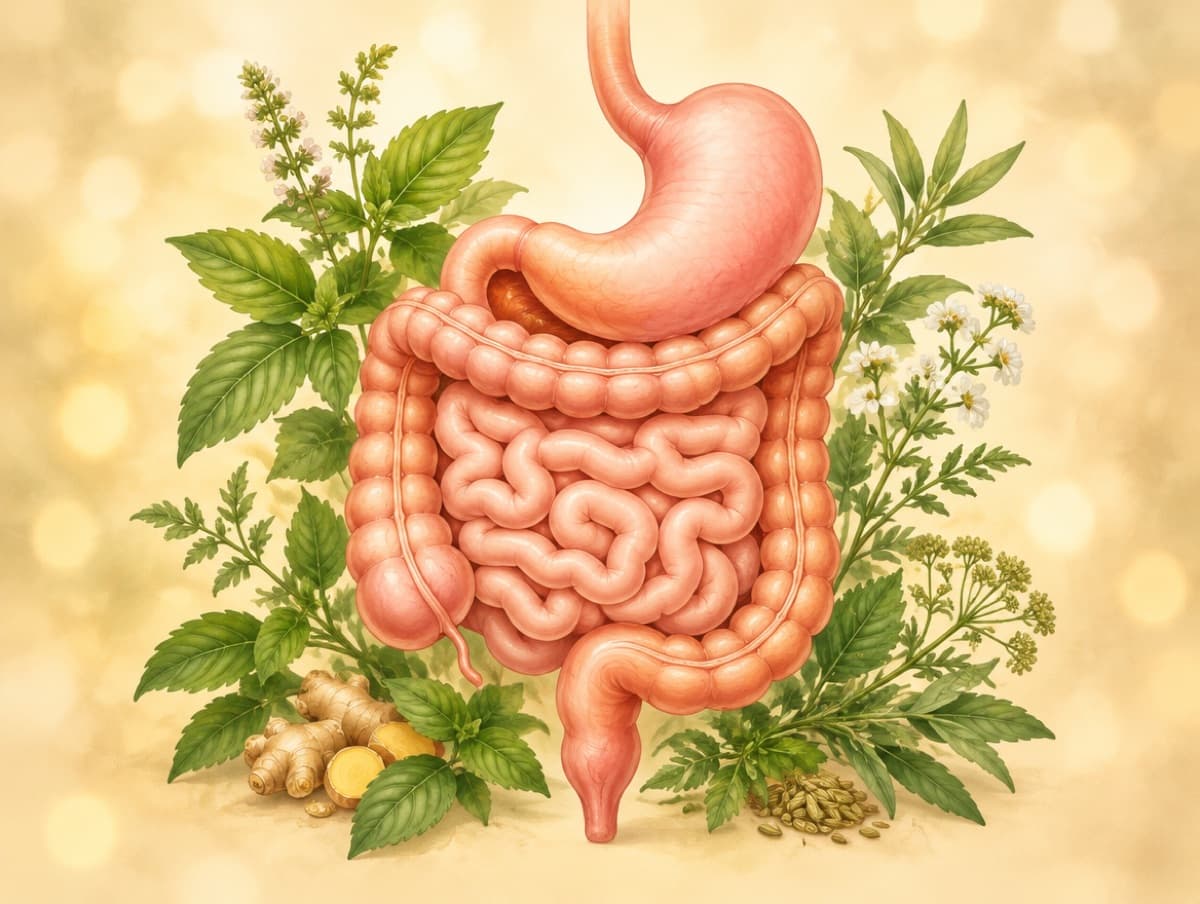
Ayurveda treats irritable bowel syndrome as Grahani, a weakness of digestive fire and the small intestine that lets food pass half-digested, with stool alternating between loose and hard, bloating and cramping. Treatment corrects Agni with diet, buttermilk and formulations such as Kutajarishta, Bilva and Musta, and settles the Vata and anxiety driving it. Dr. Bali assesses the pattern first.
01
Who this page is for
- Bloating, cramping and stool that alternates between loose and hard, diagnosed as IBS after tests came back normal.
- Urgent morning diarrhea, or several loose motions after meals, that limits travel and work.
- IBS with constipation, incomplete evacuation and a distended abdomen.
- Gut symptoms that track anxiety, poor sleep or stress, and get worse in a bad week.
- IBS that has not responded to antispasmodics, fiber supplements or diets that cut out food groups.
02
How Dr. Bali approaches ibs
Charaka devotes a chapter of the Chikitsa Sthana to Grahani, the part of the gut that holds food while Agni digests it. When Agni is weak, food is released too early and half-digested, or held too long and fermented, so the stool swings between loose and hard and the abdomen bloats. Charaka is explicit that the disorder follows Agni, and Agni follows food, routine and the state of the mind.
Dr. Bali reads the case by Dosha. Vata-type Grahani brings gas, cramping, alternating stool and anxiety. Pitta-type brings burning, urgency and loose yellow stool. Kapha-type brings heaviness, nausea and mucus. Most IBS is Vata-led with one of the others mixed in, and the reading decides whether the first task is to bind, to cool or to lighten.
Classical reference · Grahani
Charaka describes Grahani as the seat of Agni above the navel, explains how weak Agni produces stool that is sometimes loose and sometimes formed, with pain, gas, thirst and fatigue, and classifies it by Dosha. Treatment rests on kindling Agni: light, easily digested food, buttermilk, digestive and astringent herbs, and settling Vata. Madhava Nidana adds Sangrahani, the chronic relapsing form with periodic loose stool.
Charaka Samhita, Chikitsa Sthana, chapter 15 (Grahani Dosha Chikitsa); Madhava Nidana, Grahani Nidana
What the assessment looks at
- Stool pattern: loose, hard or alternating, timing after meals, urgency, mucus and incomplete evacuation.
- Agni signs: appetite, tongue coating, bloating after specific foods, and how long food sits.
- Tests already done: stool tests, celiac screen, thyroid, and colonoscopy where indicated, so that IBS is a confident diagnosis.
- Sleep, stress and anxiety, and how closely the gut follows them.
- Prakriti and Vikriti from pulse and tongue, and the Dosha leading the Grahani.
When to see a doctor locally first
Blood in the stool, diarrhea that wakes you at night, fever, unexplained weight loss, anemia, persistent vomiting, or new bowel symptoms after the age of 50 are not IBS until proven otherwise and need a local doctor first, usually with a colonoscopy. A family history of bowel cancer, Crohn's disease or ulcerative colitis also needs investigation before treatment. Dr. Bali will ask about these and your test results at the first consultation.
03
What treatment may include
- 01
Kindling Agni with food
A light, warm, cooked diet for the first weeks, with specific foods removed and added for your pattern, regular meal times, and buttermilk (Takra) prepared as the classical texts describe for Grahani.
- 02
Formulations for the stool pattern
Kutajarishta and Bilva where loose stool and urgency dominate, Musta and other digestive herbs for bloating and Ama, and Triphala in small doses where constipation leads, dispensed with a certificate of analysis.
- 03
Settling Vata
Warm oil massage of the abdomen, a regular routine, and calming formulations such as Ashwagandha or Brahmi where anxiety drives the gut, because in most IBS the mind and the colon flare together.
- 04
Basti for entrenched Vata
A short supervised course of medicated enema in Chandigarh for long-standing Vata-type IBS with constipation and cramping, once Agni has been kindled. It is not used in the diarrhea-led type until that is stable.
- 05
Sleep and stress
Simple daily practices and timing changes, because Grahani follows sleep and the state of the mind as closely as it follows food.
- 06
Follow-up
A review at three to four weeks to adjust diet and formulations, then monthly until stable. Online patients are followed by video with prescribed formulations shipped to them.
The combination is set after assessment, not before. Dr. Bali does not recommend the same protocol for every patient with the same diagnosis.
04
Formulations, shipping and the law
Formulations Dr. Bali prescribes are dispensed in India and shipped to patients abroad by tracked courier, typically within 7 to 14 days. Each parcel carries an itemised invoice, an ingredient declaration and the batch certificate of analysis. Patients in India receive them by courier within 2 to 4 days, or collect them at the Chandigarh clinic.
- Every batch is tested by an independent laboratory for identity, heavy metals, pesticides and microbial contamination. The certificate ships with the parcel and is emailed to you.
- Mineral-based classical preparations (Bhasma) are not shipped internationally. Dr. Bali prescribes plant-based formulations for patients abroad.
- Shipments stay within a three-month supply so they clear customs as personal-use supplements. Country-specific rules are on each country page.
- In-clinic procedures such as Basti, Ksharasutra and full Panchakarma are given in Chandigarh; the assessment, diet and formulations can be managed by video.
- Consultation fees are confirmed at booking. Formulation costs are quoted before anything is dispensed.
Dr. Bali is licensed to practise Ayurveda in India. For patients abroad, an online consultation is an Ayurvedic assessment with guidance on diet, routine and classical formulations; it does not replace your local doctor, and prescribed medication is never stopped without the prescriber's agreement.
05
Frequently asked questions
Can IBS be treated with Ayurveda?
Yes, and it is one of the conditions where classical Ayurveda has the most to offer, because Grahani has been described and treated for two thousand years as a disorder of Agni rather than as a diagnosis of exclusion. Most patients see bloating, urgency and the swing between loose and hard stool settle over two to three months. IBS is managed rather than made to vanish; the aim is a gut you can rely on.
How long does Ayurvedic treatment for IBS take?
Bloating and urgency usually ease within three to four weeks of diet correction and formulations. Stabilizing the stool pattern takes two to three months, longer where anxiety is a strong driver. Treatment is then tapered while diet and routine continue, with a review each season. Relapses in a stressful period are common and settle faster the second time.
Which Ayurvedic medicine is best for IBS?
Kutajarishta and Bilva for loose stool, Musta for bloating and Ama, Triphala in small doses where constipation leads, and Ashwagandha or Brahmi where anxiety drives the gut are the classical choices. The wrong one can make things worse: an astringent for the constipated type, for example. The combination is set after assessment.
Can I consult for IBS online from the USA, Canada or the UK?
Yes. IBS is well suited to video consultation, because assessment, diet, routine and formulations can all be managed remotely, with formulations shipped to you with customs documentation. Only Basti, used in a minority of Vata-type cases, requires a visit to Chandigarh.
What is Grahani?
The name Charaka gives to the part of the gut, roughly the small intestine, that holds food while it is digested, and to the disease that follows when that function weakens. Its signs, alternating stool, bloating, cramping, fatigue and food sitting undigested, match irritable bowel syndrome closely, which is why IBS is treated as Grahani.
Does stress cause IBS?
Stress does not weaken Agni on its own, but it aggravates Vata, and Vata governs the movement of the gut. In most IBS patients the bowel and the mind flare together, so sleep, routine and calming measures are part of the plan, not an afterthought. Patients whose IBS began after a period of anxiety or grief often respond well once both are treated.
Is buttermilk good for IBS?
Takra, thin buttermilk churned from curd with the fat removed, is the classical food for Grahani: light, slightly astringent, and kindling to Agni. It is not the same as thick yogurt or cold packaged lassi, which can worsen symptoms. Dr. Bali specifies how to prepare it and when to take it for your pattern.
What does treatment cost?
Consultation fees are confirmed when you book and depend on the consultation type. Formulation costs depend on the plan and are quoted before anything is dispensed, so there are no surprises after the consultation.

Written and reviewed by
Dr. Arvinder Singh Bali, BAMS
22+ years of clinical practice · 3,00,000+ patients · Government Ayurvedic College, Punjab
Dr. Arvinder Singh Bali is a BAMS qualified classical Ayurvedic physician with over 22 years of clinical practice in Chandigarh, Punjab, India, who has treated 3,00,000+ patients and provides online Ayurvedic consultations through Calmvida to patients in the USA, Canada, UK, Australia, UAE, Russia and Uzbekistan.
Last updated 3 September 2026
Consult Dr. Bali about ibs.
In-clinic in Chandigarh or by secure video from anywhere. Bring your reports and a note of what you have already tried.